
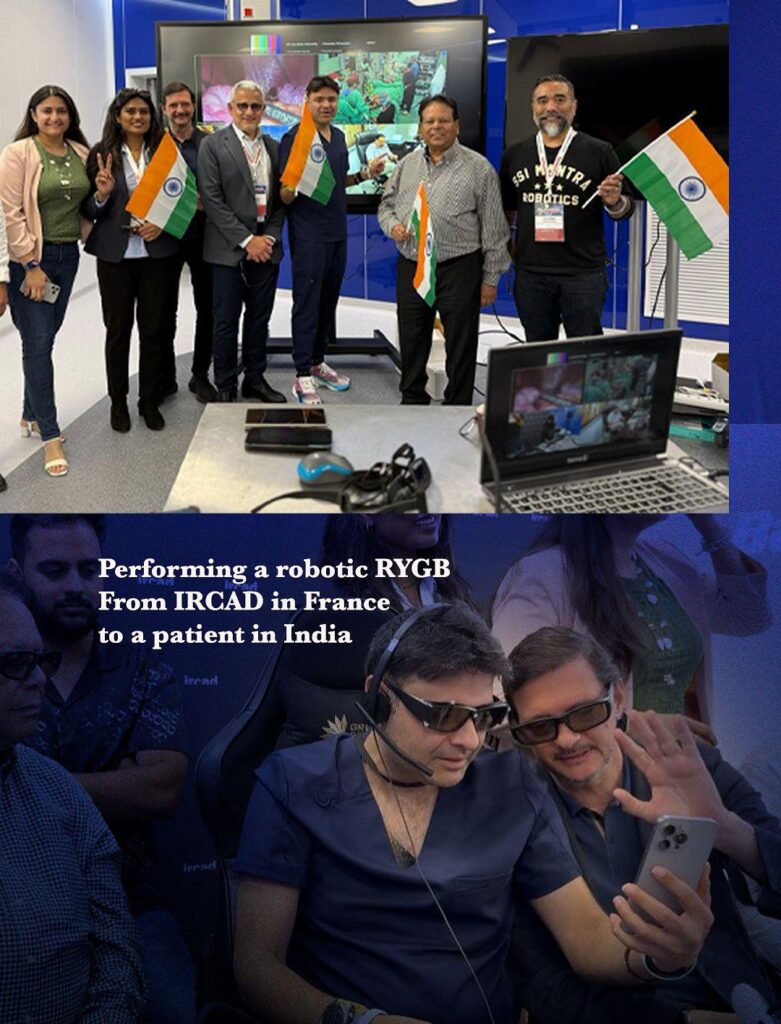
Strasbourg / Indore: A robotic bariatric operation connected a surgeon in France with a patient in India during the 2025 Society of Robotic Surgery meeting. IRCAD India’s account, published on 11 August 2025, identifies Dr Mohit Bhandari as the surgeon operating the SSI Mantra 3 console in Strasbourg, with the patient in Indore.
Updated 14 September 2026: the surgeon’s location and the historical background have been corrected using IRCAD’s published accounts.
What the participating institution reported
IRCAD India describes a gastric bypass performed over a distance exceeding 8,500 kilometres and reports an operating time of 48 minutes. The institution characterises it as the first transcontinental robotic bariatric surgery. That priority claim is attributed to IRCAD; this article is not an independent verification of every earlier bariatric operation.
The same account describes a separate procedure on 6 July 2025 between Gurugram and Indore. The domestic operation and the later France–India demonstration are distinct events and should not be combined into one timeline.
How this differs from watching surgery remotely
In telesurgery, the surgeon controls robotic instruments across a network connection. A live teaching stream can instead let remote clinicians watch and discuss an operation while the operating surgeon remains with the patient. Medtronic’s description of surgical live streaming illustrates the latter educational model. The two uses of connectivity should not be treated as interchangeable.
The historical milestone was in 2001
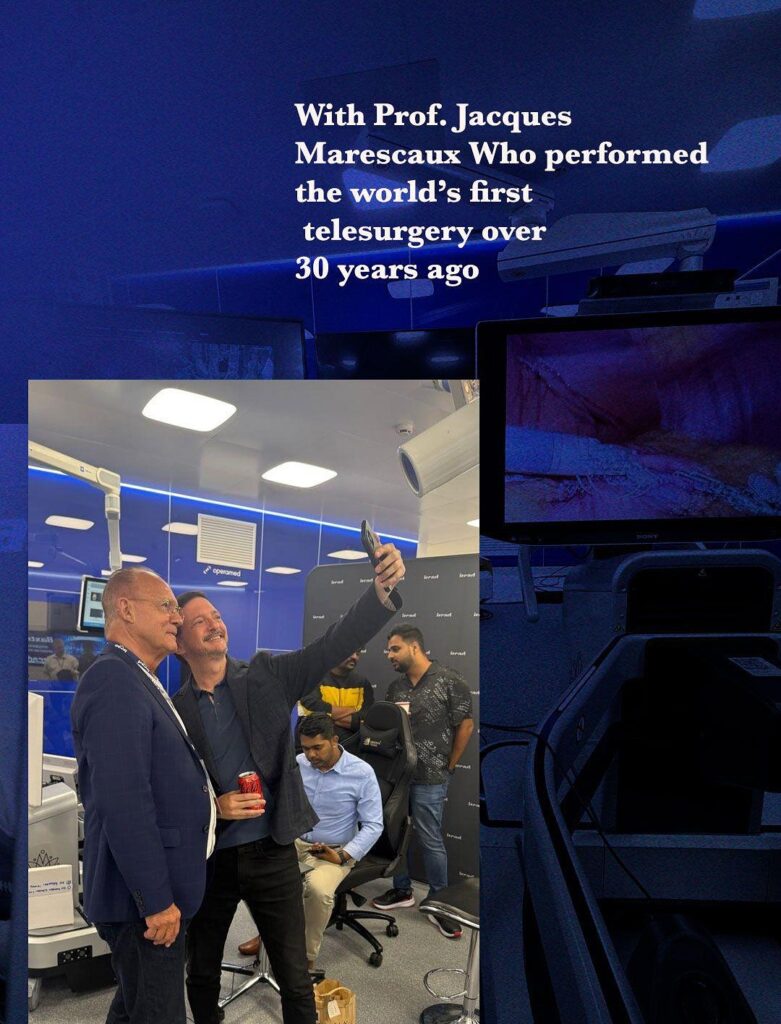
IRCAD’s record of Operation Lindbergh dates the transatlantic operation to 7 September 2001. The surgeons were in New York and the patient was in Strasbourg. Our earlier wording said this happened more than 30 years before the 2025 bariatric operation and implied that the surgeon operated from Strasbourg; both points have been corrected.
What this report does—and does not—establish
The participating institution’s account describes a specific demonstration. It does not by itself establish that remote surgery is routinely available for all patients, less expensive, or safer than other approaches. Those broader conclusions would require evidence beyond a single reported case.
Training and clinical support remain part of the wider story. Read our updated coverage of SMSIMSR’s robotic cardiac surgery and training collaboration, or browse further surgical news.